
For the women artisans of rural Bharatpur, skill has never been the problem. In village homes across Rupbas and Uchchain blocks, members of self-help groups craft jute bags and jute home décor, paper-based handicrafts and other eco-friendly handmade products of a quality that would hold its own in any city showroom. What they have lacked is reach. Local haats and middlemen set the limits of their market — and the prices. Meanwhile, customers across India increasingly shop with a phone in their hand. Bridging that gap is exactly what a new NABARD-sponsored initiative set out to do.
The Programme: Two Blocks, Four Days, One Goal
In the first week of June 2026, Shree Guru Jambeshwar Sewa Sansthan (SGJSS), Jaipur, organized a NABARD-sponsored Digital E-Commerce Marketing Training Programme for women SHG members in Bharatpur district.
The training ran in two batches of two days each, reaching fifty women in all. At Khanua Gram Panchayat in Rupbas Block, 25 women engaged in jute product making trained on 1–2 June 2026; at Uchchain, 25 women engaged in paper-based product making trained on 3–4 June 2026. Both batches covered digital e-commerce skills end to end — from creating an online presence to onboarding their products onto e-commerce platforms. The sessions were conducted by digital marketing specialist Shri Gokul Saini of Add-On Nexus Private Limited, the programme’s training partner.
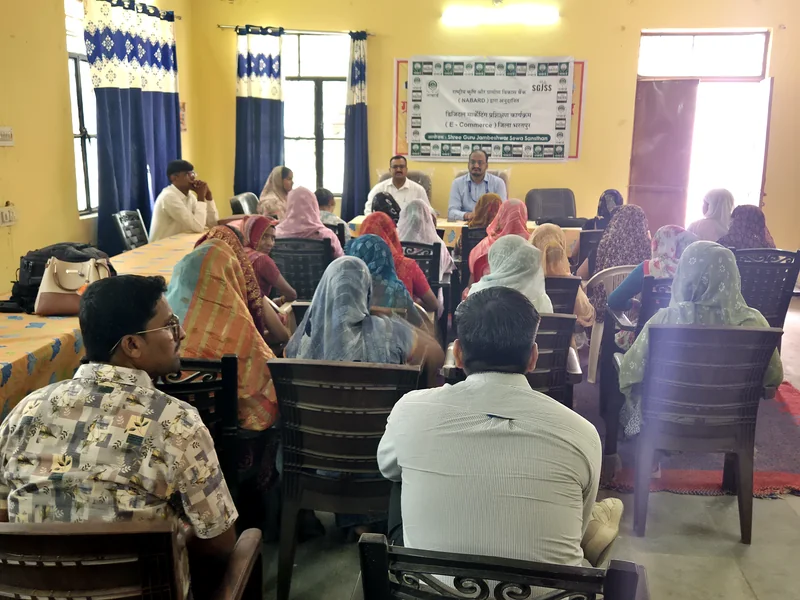
Addressing the inaugural session, Shri Shivam Kumar Agrawal, District Development Manager, NABARD, Bharatpur, told participants that products made in their villages deserve national and international markets, and that trainings of this kind are part of NABARD’s priority of connecting rural producers directly with buyers. Smt. Brijesh Kumari, president of the SHG cluster, noted that the women of the area already produce excellent jute and craft items — what the training adds is the means to sell them far beyond the village.
Shri Dharmpal Bishnoi, Secretary, SGJSS, reminded the gathering that the Sansthan has worked for the upliftment of rural and underserved communities since 2007, and that helping women convert their craft into a stable digital-age livelihood is a natural extension of that mission.
What the Women Learned
Over the two days at each venue, the sessions stayed deliberately practical — taught on the very smartphones the women carry. The curriculum covered:
- Digital marketing fundamentals and how online buyers think
- Product photography with a mobile phone
- Setting up and running an online store
- Social media promotion and WhatsApp Business
- Branding, packaging and pricing strategies
- Customer engagement and order management
- Online payment platforms
- Onboarding products onto e-commerce marketplaces
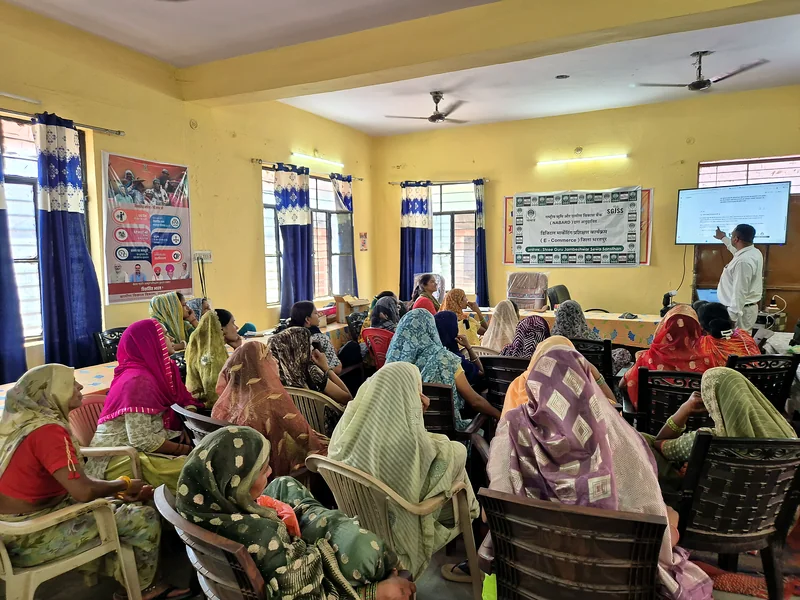
A Room Full of Phones — and Possibility
Anyone who walked into the Uchchain venue on 3 June would have seen something quietly remarkable: rows of women in traditional dress, many attending a formal training for the first time, holding up their phones to photograph sample products, comparing listings on a trainer’s laptop, and asking sharp, commercial questions — what should this cost online, who pays for delivery, how does the money reach me? By the final afternoon, all fifty participants across the two venues had received certificates of completion, and with them, a visible boost in confidence.
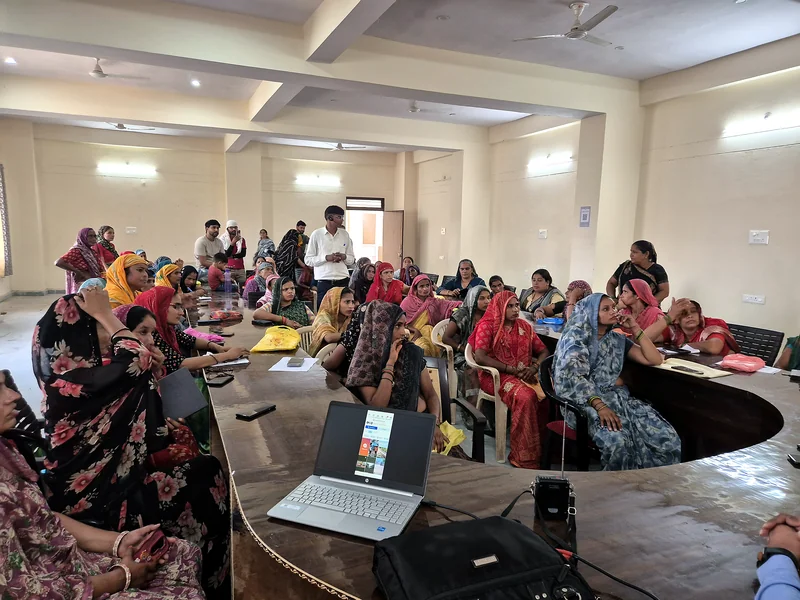
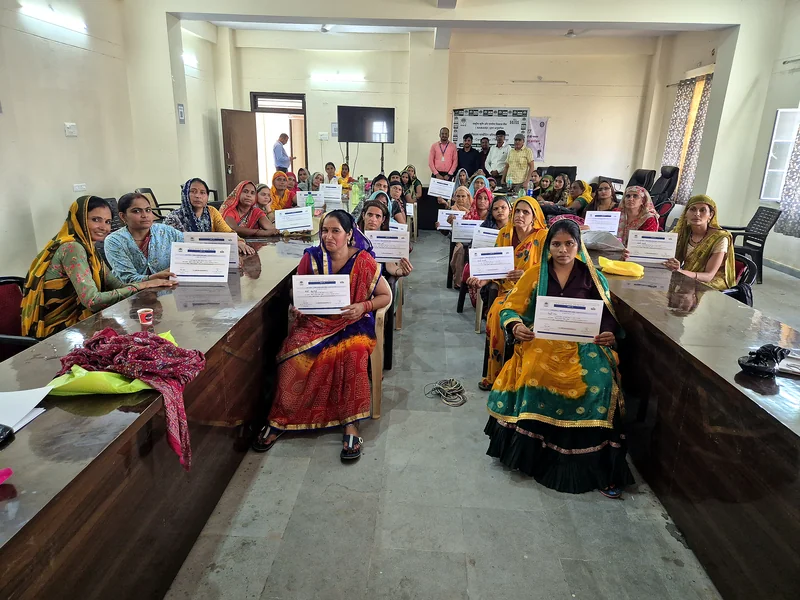
Why It Matters
For a rural woman artisan, digital access is income access. Selling online means better prices than the local middleman offers, a customer base that does not end at the district border, and payment that arrives directly into her own account. Each of those changes strengthens her say in household decisions. When dozens of SHG members in a block gain these skills together, the effect compounds — groups can photograph, list, price and ship as a collective, turning individual craft into a shared enterprise.
SGJSS’s Six-Month Handholding Commitment
The training is the beginning of this engagement, not the end of it. SGJSS has committed to six months of post-training handholding support for the participants, including continued digital marketing guidance, market linkage support, product promotion assistance, onboarding onto e-commerce marketplaces, and one-to-one business mentoring as the women take their first orders. The goal is simple: that the knowledge gained over these four days becomes a sustainable livelihood, not a certificate on a wall.
In the News
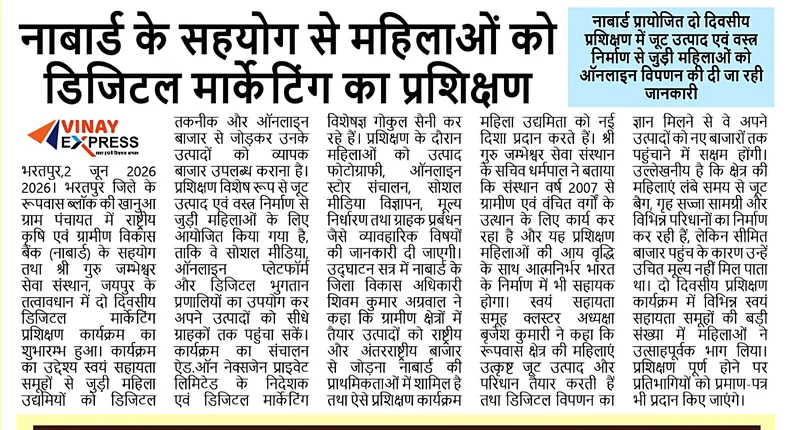
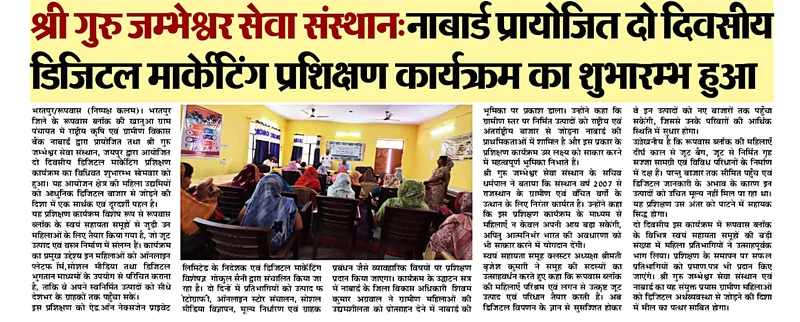
The programme drew encouraging local media attention, with coverage in Vinay Express, Kamyab Club, First News Weekend and Buland Rajasthan, among other outlets, in the first week of June 2026.
The Road Ahead
Rural women’s entrepreneurship and digital inclusion are no longer separate conversations — they are the same one. With NABARD’s support and SGJSS’s grassroots presence, fifty women of Khanua and Uchchain now hold the tools to take their jute bags, paper crafts and eco-friendly products to customers anywhere in India. SGJSS remains committed to walking alongside them until those first online sales become steady incomes, and steady incomes become independence.
Support this work. If you are a CSR partner, donor or volunteer who would like to help rural women artisans reach wider markets, partner with us or donate — and explore our other projects.