
India is an agricultural nation. More than half of its workforce depends on farming, animal husbandry, and allied activities for their daily sustenance. Yet for millions of rural families — particularly in states like Rajasthan — the income from agriculture alone is rarely enough. Erratic monsoons, fragmented landholdings, outdated farming methods, and a near-complete absence of market access keep rural households trapped in cycles of low productivity and poverty. The missing link, more often than not, is knowledge. Structured, practical, and locally relevant agricultural training has the power to transform rural livelihoods from subsistence-level survival into viable, dignified enterprise.
At Shree Guru Jambeshwar Sewa Sansthan (SGJSS), we have witnessed this transformation firsthand — in the fields of Bikaner, in the dairy farms of Bharatpur, and in the goat pens of Dholpur. This article explores why agricultural training matters, what it looks like on the ground, and how SGJSS is working with NABARD and rural communities to make it a reality.
Why Agricultural Training is the Foundation of Rural Livelihoods
Agriculture in India employs over 600 million people, yet its contribution to GDP remains disproportionately low — a reflection of low productivity rather than low potential. The gap between what rural farms could produce and what they actually produce is enormous, and it is largely a skills gap.
A first-generation farmer in a desert district of Rajasthan inherits knowledge passed down through generations — knowledge that may have served adequately a century ago but falls short in an era of improved crop varieties, scientific animal husbandry, digital market access, and climate variability. When that farmer receives structured training on even one dimension — say, the correct deworming protocol for her goats, or the optimal sowing date for her wheat crop — the return on investment is immediate and measurable.
Research consistently shows that every rupee invested in agricultural extension and training generates returns of four to twelve rupees in increased farm income over a five-year horizon. For women farmers and SHG members — who constitute the primary workforce in livestock and kitchen garden management — the returns are even higher, because training gives them not just knowledge but also confidence, agency, and access to credit and markets that were previously out of reach.
The SGJSS Approach: Skills First, Enterprise Always
SGJSS has been implementing agricultural skill development programmes since 2007, initially through community health and women’s empowerment work and progressively expanding into livestock-based livelihoods, agroforestry, and rural enterprise development. Our approach is rooted in three principles.
First, training must be practical, not theoretical. We do not believe in classroom-only models. Every SGJSS training programme combines classroom sessions with hands-on demonstrations — live animals at a demonstration unit, field visits to functioning farms, and individual action plans that each participant commits to implementing within 30 days of training completion. When a woman in Sarmathura Block, Dholpur learns to identify the early signs of PPR in her goat, she learns it by observing an animal, not by reading a textbook.
Second, enterprise development must accompany skill development. Teaching a farmer to grow better crops or rear healthier animals is only half the job. If she cannot sell her produce at a fair price, the improved productivity does not translate into improved income. SGJSS programmes therefore always include market linkage sessions, collective selling facilitation through Self-Help Groups and Goat-Based Livelihood Groups, and basic financial literacy covering KCC credit, livestock insurance, and simple record-keeping.
Third, community institutions must outlast the project. The most durable impact comes not from individual skill transfer but from the institutions built during the programme — SHGs that continue to function as savings and credit bodies, Pashu Sakhis who continue to provide doorstep veterinary services for a fee, and Producer Organisations that continue to aggregate and sell produce collectively after SGJSS’s direct involvement ends.
Key Programme Areas: Where SGJSS Works
Goat Rearing and Livestock Management: SGJSS has successfully implemented NABARD-sponsored Livelihood and Enterprise Development Programmes (LEDP) in Bikaner and is currently expanding to Bharatpur and Dholpur Districts. The Dholpur Goat Rearing LEDP targets 120 rural women from four villages in Sarmathura Block, covering scientific goat management, Barbari and Sirohi breed improvement, vaccination, disease management, collective selling, and KCC linkage. The target is to raise family income from goat rearing by Rs 22,000 to Rs 25,200 per year.
Dairy and Animal Husbandry: In Bharatpur, SGJSS has been working with cattle farmers on scientific dairy management, breed improvement through artificial insemination, balanced feeding, and milk cooperative linkages — all under NABARD’s LEDP framework for animal husbandry.
Digital Literacy for Agricultural Entrepreneurs: Modern agriculture cannot be divorced from digital tools. SGJSS’s digital literacy programmes for SHG women in Bharatpur’s Uchchain and Khanua clusters have trained rural women to use e-NAM portals for price discovery, digital payment systems for selling produce, and government scheme portals for accessing benefits under PM-Kisan, PMFBY, and KCC.
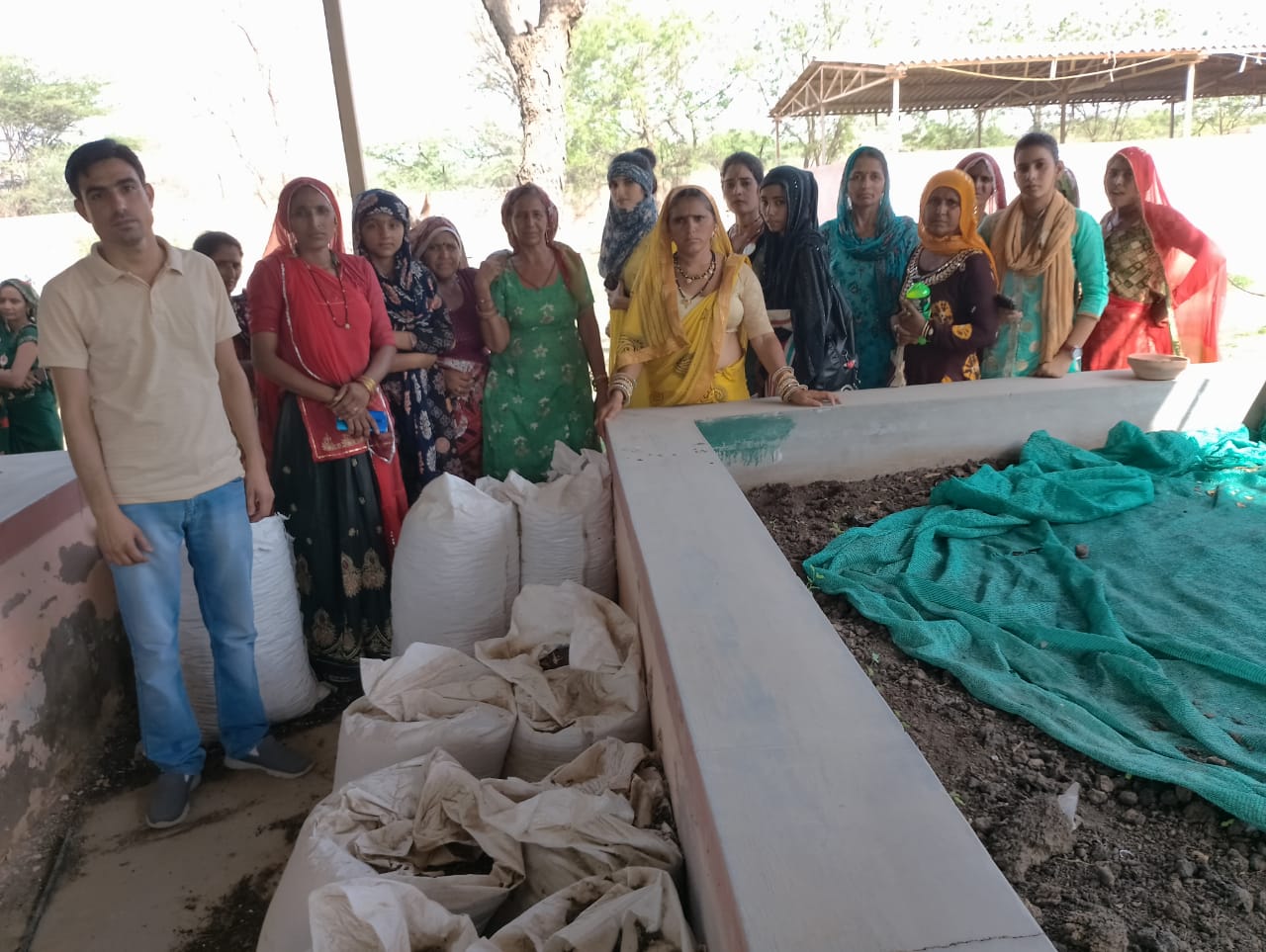
Agroforestry and Environmental Conservation: Rooted in the Bishnoi tradition of environmental stewardship, SGJSS integrates agroforestry components into its livelihood programmes — promoting Khejri, Pomegranate, and Neem plantation alongside conventional farming as a long-term income source and carbon sink.
The Aspirational District Opportunity
Dholpur, Bharatpur, and several other districts where SGJSS operates fall under India’s Aspirational Districts programme — districts identified by NITI Aayog as lagging on key development indicators and therefore receiving priority funding and attention from central and state governments. For agricultural training programmes, this means enhanced NABARD grant support, priority access to government extension services, and a policy environment that actively encourages NGO-led livelihood interventions.
SGJSS is positioned to serve as a bridge between government schemes and the rural communities that need them most — translating policy into practice, scheme entitlements into real income, and training into enterprise.
A Call to Action
Agricultural training is not charity. It is an investment — in human capital, in rural enterprise, in food security, and in the dignity of the millions of men and women who feed our nation. SGJSS invites individuals, corporates, and institutions to partner with us in expanding our agricultural training reach across Rajasthan.
Whether through CSR funding, volunteer expertise, or simply spreading the word, every contribution to agricultural skill development in rural Rajasthan creates a ripple of change that extends far beyond the training room — into fields, homes, and futures.
To support SGJSS’s agricultural training programmes, visit sgjss.org/donate-now or write to info@sgjss.org.
Shree Guru Jambeshwar Sewa Sansthan (SGJSS) is a NABARD-designated Project Implementing Agency registered under the Rajasthan Societies Registration Act (Reg. No. 345/Jaipur/2007-08). SGJSS holds FCRA, 12A, 80G, CSR-1 and NSE Social Stock Exchange registrations. For more information visit sgjss.org.
Media Coverage
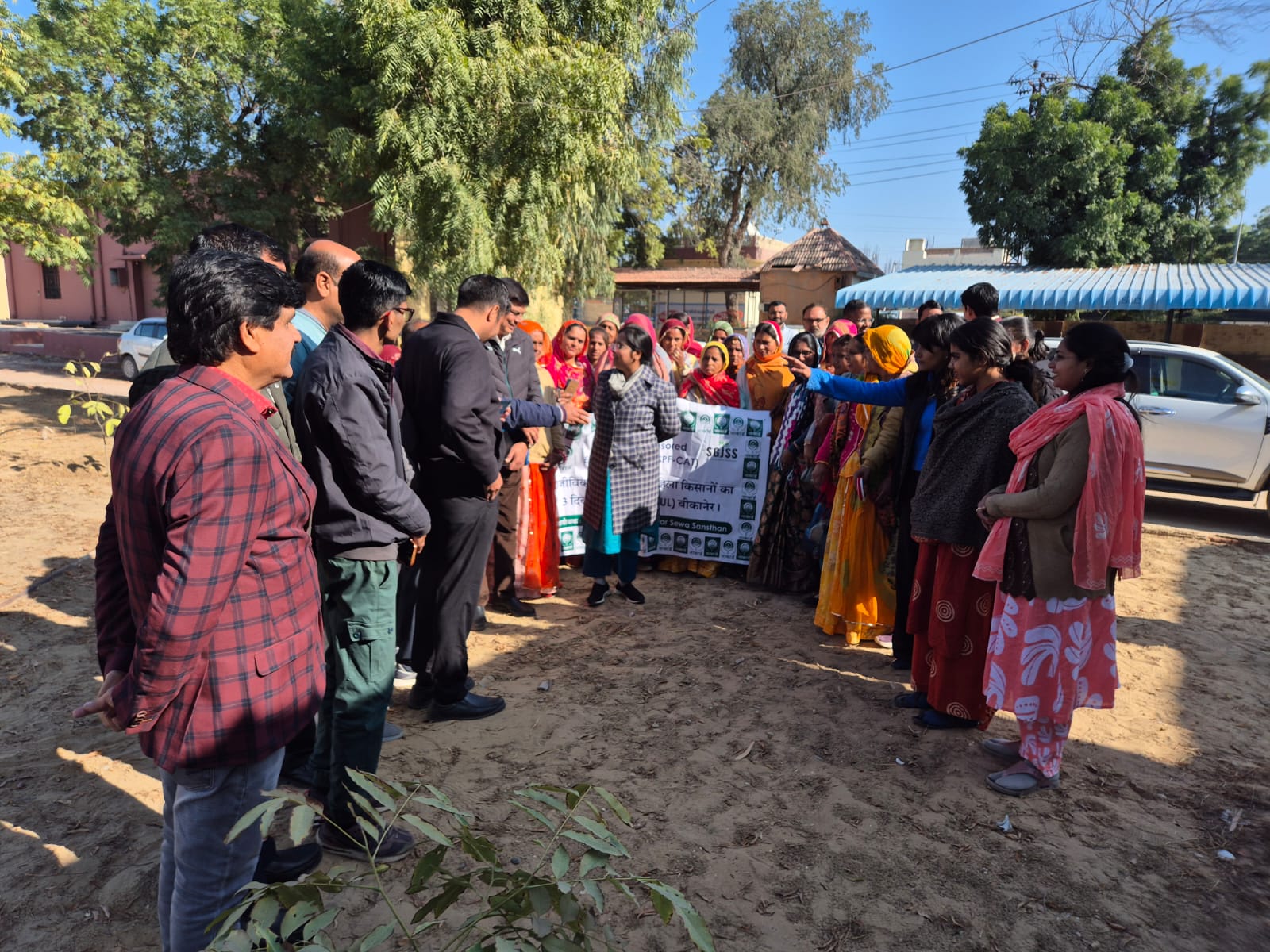
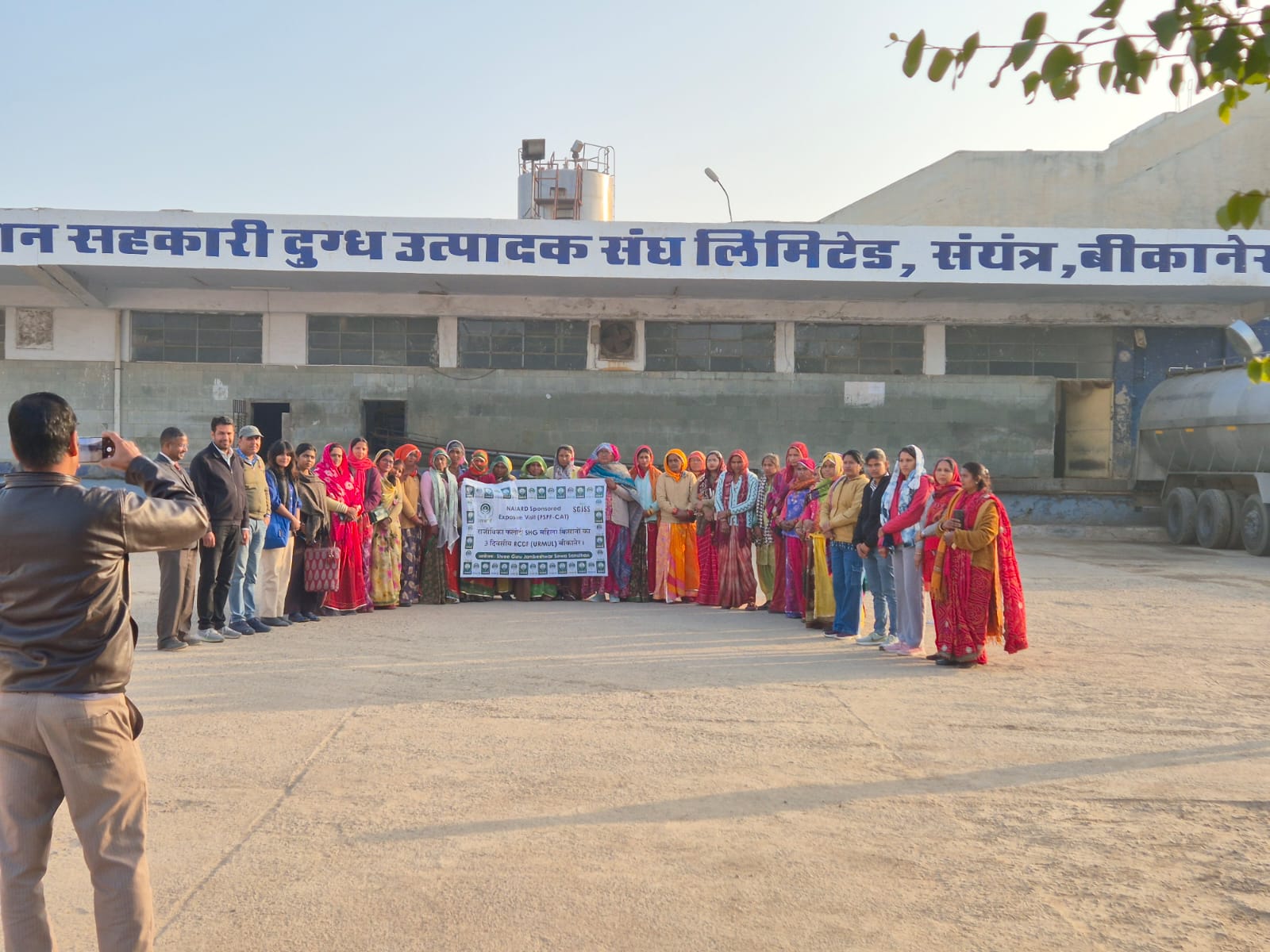
SGJSS’s NABARD-sponsored dairy exposure visit for SHG women farmers at the RCDF URMUL cooperative plant in Bikaner was covered in the regional press, including Rajasthani Chirag. The coverage highlighted the workshop on dairy-based livelihoods, value addition, quality standards, and collective marketing for rural women.